Expectations were high heading into Nvidia‘s (NASDAQ: NVDA) fiscal 2025 second-quarter financial report. The company has become the de facto standard bearer for the artificial intelligence (AI) revolution. Its graphics processing units (GPUS) provide the computational horsepower necessary to create the large language models (LLMs) that make generative AI possible.
The surging demand for AI has propelled Nvidia’s stock into the stratosphere. The stock has gained more than 150% so far this year and more than 750% since the accelerating adoption of AI kicked off early last year (as of this writing).
In recent weeks, however, investors have become concerned that Nvidia has simply come too far, too fast, and they are wondering whether the hectic pace of AI adoption could continue. Nvidia answered that question with a resounding “yes,” but given the stock’s parabolic gains, blockbuster results simply weren’t enough.
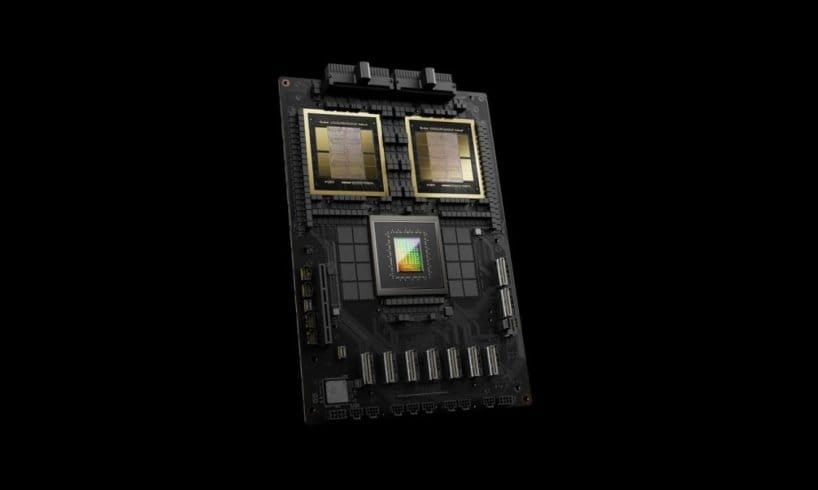
Nvidia’s GB200 Grace Blackwell AI Superchip. Image source: Nvidia.
By the numbers
In the second quarter, Nvidia generated record revenue of $30 billion, which surged 122% year over year and 15% quarter over quarter. This gave rise to adjusted earnings per share (EPS) of $0.68. The results sailed past analysts’ consensus estimates for revenue of $28.6 billion and EPS of $0.64. Revenue also eclipsed management’s forecast of $28 billion.
The headliner was Nvidia’s data center segment — which includes chips used for AI — as revenue of $26.3 billion soared 154% year over year and 16% sequentially, fueled by strong AI adoption among cloud computing and hyperscale data center operators.
It wasn’t just AI that fed Nvidia’s growth, though the data center segment dwarfed results from the company’s other segments (all segment gains year over year):
The gaming segment grew 16% to $2.9 billion.
The professional visualization segment jumped 20% to $454 million.
The auto segment climbed 37% to $346 million.
Original equipment manufacturer increased 33% to $88 million
Nvidia’s gross margin of 75.1% was up compared to 70.1% in the prior year quarter, largely due to the company’s…
..