US bank stocks surged Thursday following a jumbo rate cut from the Federal Reserve, a sign of bullishness among investors who now expect an easing of monetary policy will boost Wall Street giants and smaller regional lenders.
Goldman Sachs (GS), Capital One (COF) and Citigroup (C) each rose more than 3% Thursday morning, followed by smaller rises for Wells Fargo (WFC), Bank of America (BAC), JPMorgan Chase (JPM) and Morgan Stanley (MS).
The KBW Nasdaq Bank index (^BKX) and two other indexes tracking large (KRE) and mid-sized (^KRX) regional banks also churned higher by roughly 2%.
What banks and their investors are hoping for is a repeat of 1995, when a soft landing for the US economy and the beginning of a rate-cutting cycle sparked one of the best multi-year periods for banks in US history.
The reality of how this moment plays out for banks is probably more complicated, with many unknowns still lurking.
How the benefits and costs of lower rates affect most banks will show up in their net interest income, a crucial revenue measure that represents the lending margin left over after banks pay their depositors.
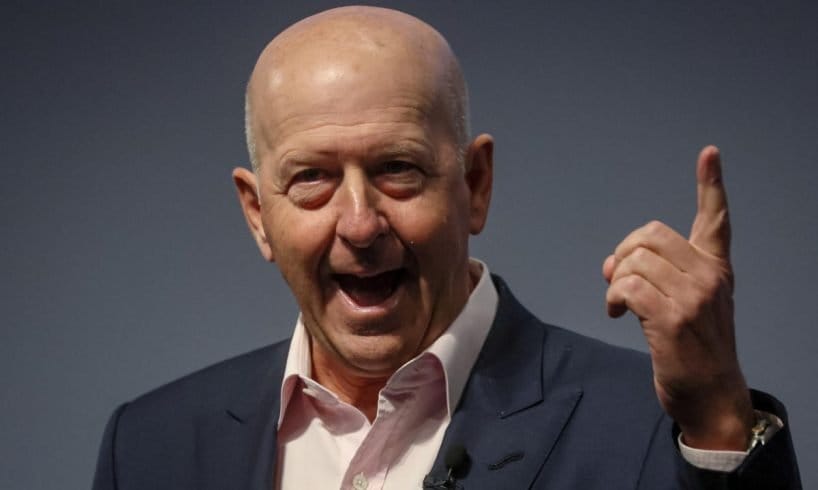
Goldman Sachs CEO David Solomon. REUTERS/Brendan McDermid (REUTERS / Reuters)
Moody’s Ratings said in a note earlier this week that the rate cuts will initially be a “credit negative” for most banks due to an expected tightening of that net interest income.
“We expect their deposit costs to reprice downward more slowly than their loan yields, constraining net interest income, which is most banks’ largest revenue source,” analysts for Moody’s Ratings said in a note earlier this week.
Last week, JPMorgan COO Daniel Pinto alarmed investors when he said that the consensus view among analysts that the bank would earn $94 billion in 2025 was “a bit too optimistic” due partly to the effect of falling rates.
A screen on the trading floor at The New York Stock Exchange displays a news conference with Federal Reserve Chair Jerome Powell. REUTERS/Andrew Kelly (Reuters / Reuters)
But longer term, things look brighter, according to Moody’s.
“Reductions in…
..