(Bloomberg) — Stocks in Asia slumped the most since the Aug. 5 rout, tracking a selloff in US peers driven by a plunge in Nvidia Corp.
Most Read from Bloomberg
Shares of Asian chipmakers tumbled amid renewed concerns over the artificial intelligence frenzy, bringing a regional equity benchmark down more than 2%. Chip giants Taiwan Semiconductor Manufacturing Co. and SK Hynix Inc. fell at least 4% each. US futures also slid in Asian trading after the S&P 500 shed more than 2%.
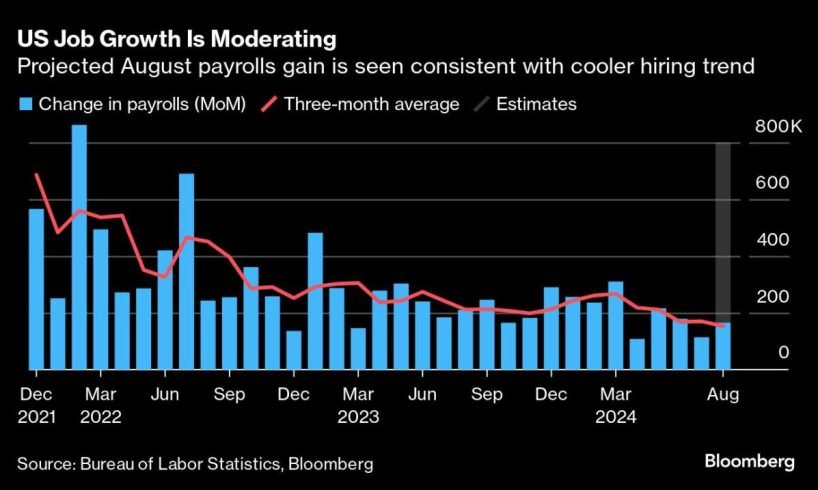
The broad risk-off mood came as a closely watched US manufacturing gauge again missed forecasts, shifting investor focus toward the odds of an economic slowdown in the world’s largest economy. That added to an already-weak sentiment in Asia, where a run of disappointing Chinese data had been hurting risk assets.
“The extent of that Aug. 5 move probably burnt more than a few and it’s hard to get past those memories especially as the hard landing versus soft landing confusion is still unsettled,” said Charu Chanana, head of FX strategy at Saxo Markets in Singapore. “I would be rather cautious here” as soft data will raise recession concerns while positive data will ease rate-cut expectations, she added.
Treasury yields steadied after a tumble Tuesday. A dollar gauge snapped a five-day winning streak, its longest since April. The yen edged higher. Oil pushed lower after a decline of almost 5% on Tuesday amid weak demand and oversupply concerns.
Elsewhere in Asia, the Australian dollar held on to losses as data showed Australia’s economic weakness persisted in the three months through June.
Chinese stocks fell after a private survey showed services activity expanded less than expected, the latest sign of the economy’s fragility.
The S&P 500 and the Nasdaq 100 saw their worst starts to a September since 2015 and 2002, respectively. With inflation expectations anchored, attention has shifted to the health of the economy as signs of weakness could speed up policy easing. While rate cuts tend to bode well for equities, that’s not usually the case when the Fed is rushing to prevent a…
..